Common Fishes in the Philippines
The Philippines is not only a country reflected on well-preserved artifacts, canvases, fabrics, or chiseled molds, with a history worth revisiting, but a country also known for its rich marine biodiversity.
To give you an idea regarding popular types of local fish in the country, we have listed some that would also be of great use in your next market hunt, together with their Filipino names, English names, scientific names, distinct characteristics, and market price.
Alumahan (Long-Jawed Mackerel; Rastrelliger kanagurta)
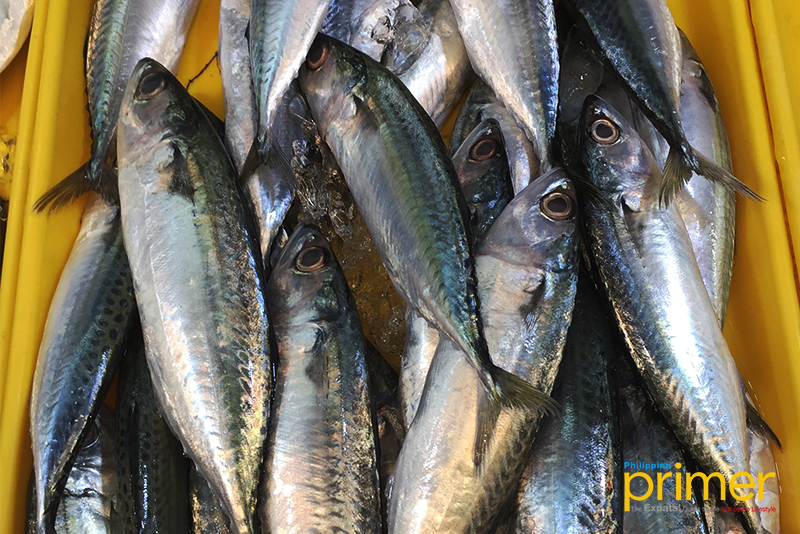
These mackerel species belong to the same fish family as tunas (family Scombridae). They are widely common in the Philippines and are generally found in shallow coastal waters.
ADVERTISEMENT
The alumahan fish is available in public markets usually priced at Php 280 per kilo.
Bisugo (Threadfin Bream; Nemipterus japonicas)
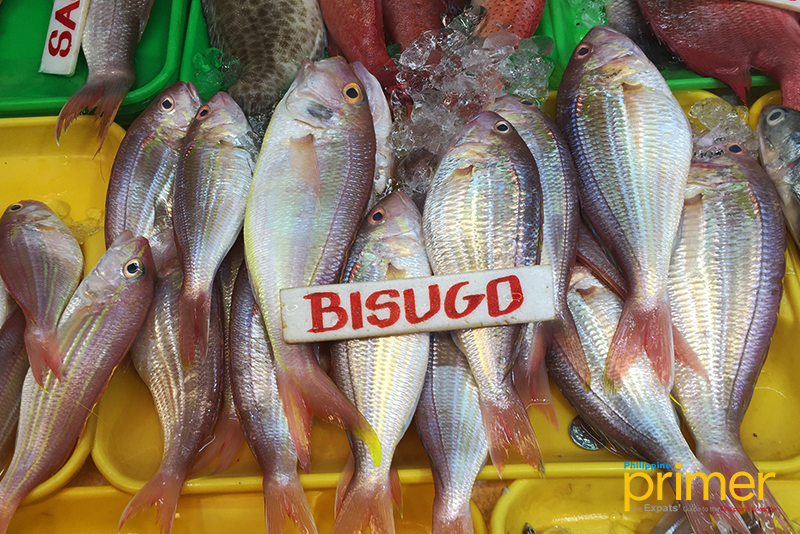
These species are commonly found in tropical and salty waters in the Indian and Western Pacific ocean, which vary in sizes as well. They are relatively popular in the Philippine market because they are versatile for many dishes.
The bisugo fish is available in public markets usually priced at Php 350 per kilo.
Salay-Salay/ Salaybutang/ Apahay (Yellowtail Scad; Selaroides leptolepis)

These species are small and somewhat easy to catch although their meat is slightly coarse. They belong in the scad family and are known for the distinct yellow details in their bodies and tails.
The salay-salay fish is available in public markets usually priced at Php 380 per kilo.
Galunggong (Mackarel Scad; Decapterus sp)
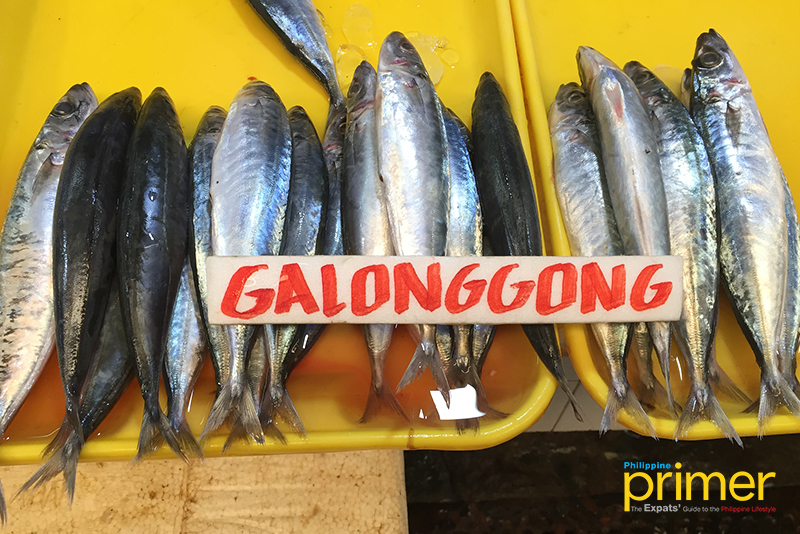
This fish is extremely popular in Philippine markets, especially with the masses as they are relatively inexpensive and remarkably tasty. They are found in salt waters especially in Northeastern Palawan and in Navotas-dubbed as the country’s fishing capital.
The galunggong fish is available in public markets usually priced at Php 60 per 1/2 kilo.
Salmon (Threadfin Salmon; Eleutheronema tetradactylum)

There are threadfin salmon around Philippine waters but most of these fishes are imported and increasingly becoming popular.
The salmon fish is available in public markets usually priced at Php 650 per kilo.
Bangus (Milk Fish; Chanos chanos)

Bangus is an important seafood in the Pacific with the Philippines even has a bangus festival in Dagupan where there is a major milkfish aquaculture industry. This fish has olive green skin with silvery scales with a milky white bottom.
The bangus fish is available in public markets usually priced at Php 130 per kilo.
Dalagang Bukid (Yellowtail fusilier; Caesio cuning)

This fish got its name because of its unique red color. The color red is often used in describing Filipina farm girls wearing a red wrap-around skirt in the province.
The dalagang bukid fish is available in public markets usually priced at Php 280 per kilo regular sized, Php 380 per kilo for Dalagang Lapad, a bigger and fatter fish of the same kind.
Dilis (Anchovy; Engraulidae)
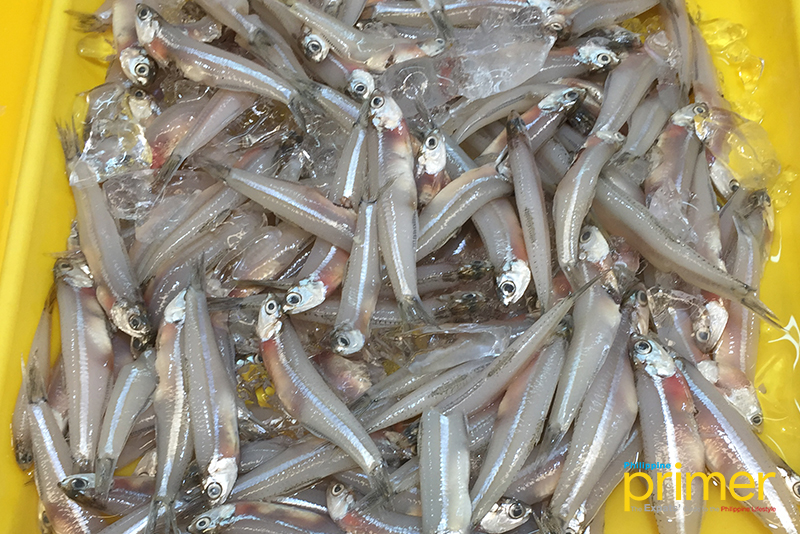
This type of fish is extremely popular in the Philippine market, especially to be used as spicy bar chow or as toppings on rice. The dilis fish is common in shallow saltwater reefs.
Dilis is available in public markets usually priced at Php 200 per kilo.
“Yellow-Fin” (Big eye tuna; Thunnus obesus)

The big eye tuna is of the same species of the yellow-fin tuna (Thunnus albacares) thus also having a yellow dorsal fin and is more common in Philippine markets to be (mis)identified as “yellow-fin” tuna. This fish is commonly found in the open waters of all tropical and temperate oceans.
The “yellow-fin” fish is available in public markets usually priced at Php 230 per kilo.
Kitang (Spotted Scat; Scatophagus argus)
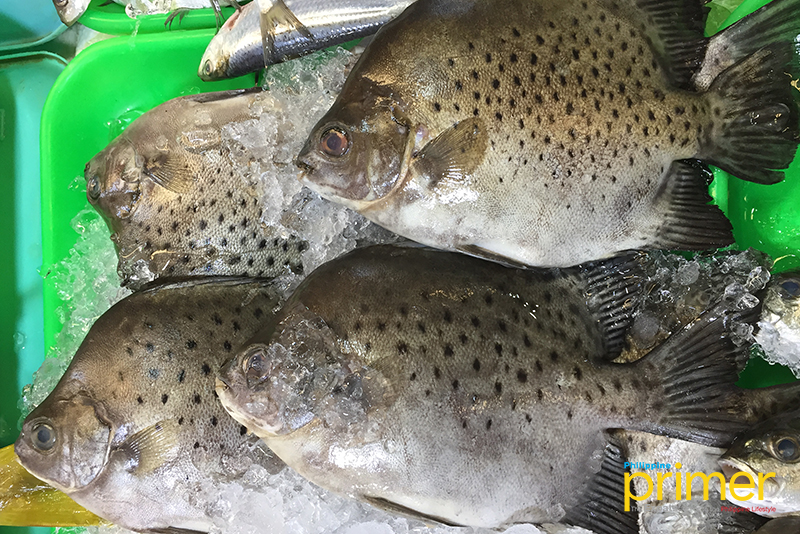
This flat fish is a popular brackish water fish with a silver-bronze body with black spots. In Philippine dishes it is usually cooked with vinegar, the process is called paksiw in Tagalog.
The kitang fish is available in public markets usually priced at Php 200 per 1/2 kilo.
Maya-Maya (Red Snapper; Lutianus sp)

This type of fish is popular in Philippine markets due to their delicate and flavorful white meat. They usually vary in size that can either be small or big. They are known for their vivid and distinct red color and are commonly found in salty environments and shallow reefs.
The Maya-Maya fish is available in public markets usually priced at Php 350 per kilo.
Sapsap (Ponyfish/ Slipmouth; Leiognathus sp)
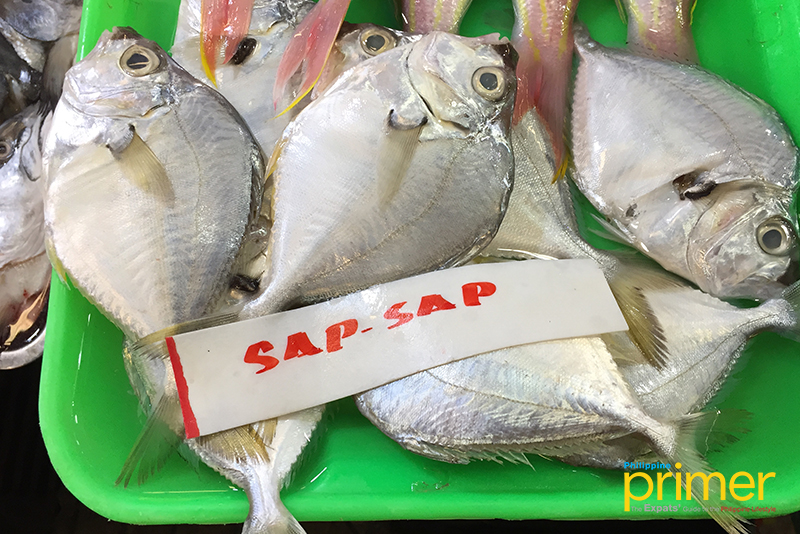
This type of fish is usually characterized by their slimy bodies, small scales, and a widely extending mouth. They only grow under six (6) inches in length. Because of its abundant population in its natural habitat- the shallow coastal waters. This feed is also usually used for various food cuisines especially in the country.
The sapsap fish is available in public markets usually priced at Php 380 per kilo.
Tulingan/ Tambakol (Mackarel Tuna)
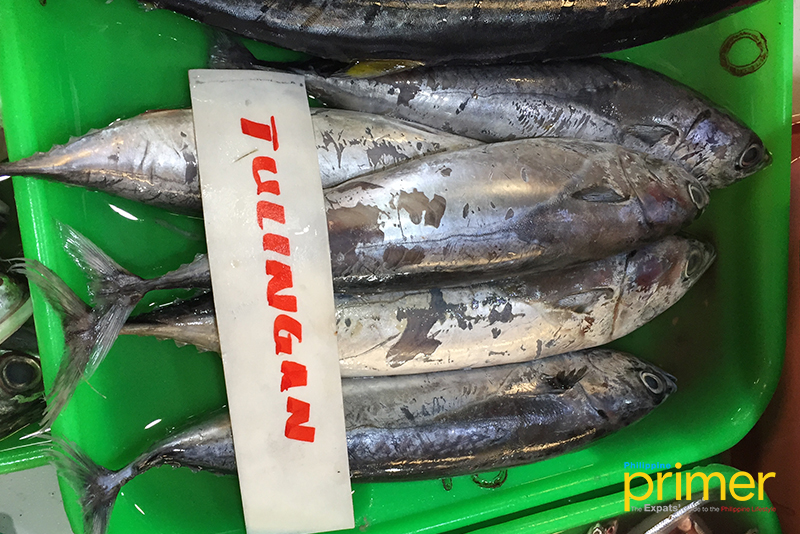
With its vertical stripes at the back, deeply forked tail, and a small velvety touch of scale, this fish is usually found offshores of both temperate and tropical seas commonly swimming with a school across the deep ocean.
The tulingan fish is available in public markets usually priced at Php 60 per 1/2 kilo.
Hiwas/ Tahas (Mene Moonfish; Mene maculata)
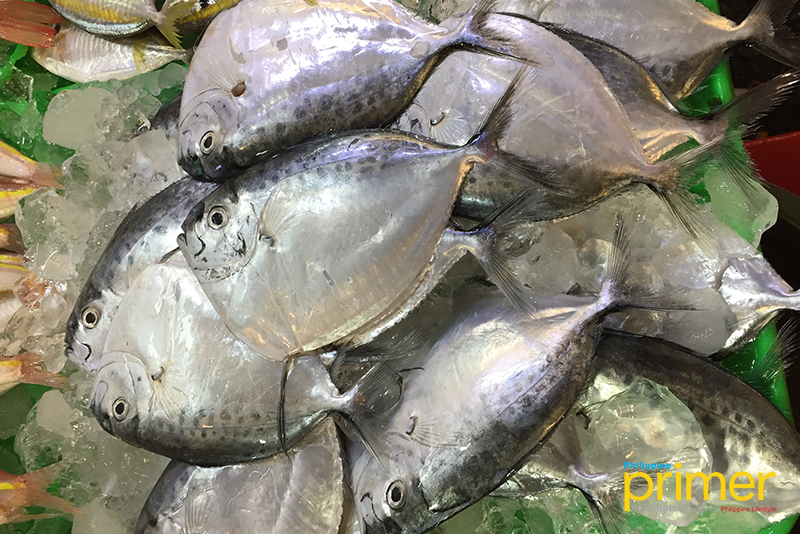
This type of fish is usually found in muddy, salty waters and often in deep waters. They are often mistaken for the sapsap fish due to their similar features- flat body and big head but the hiwas has a protruding belly.
The hiwas fish is available in public markets usually priced at Php 150 per 1/2 kilo.
Lapu-Lapu (Grouper; Epinephelus sp)

Groupers are a high-valued type of fish because of their white, flaky flesh which is usually distributed in markets either dead or fresh. They are commonly found in saltwater and are hard to raise because of their carnivorous nature. A famous dish using this fish is escabeche or pickled fried fish.
The Lapu-Lapu fish is available in public markets usually priced at Php 450 per kilo.
Salmonete (Striped Red Mullet; Mullus surmuletus)
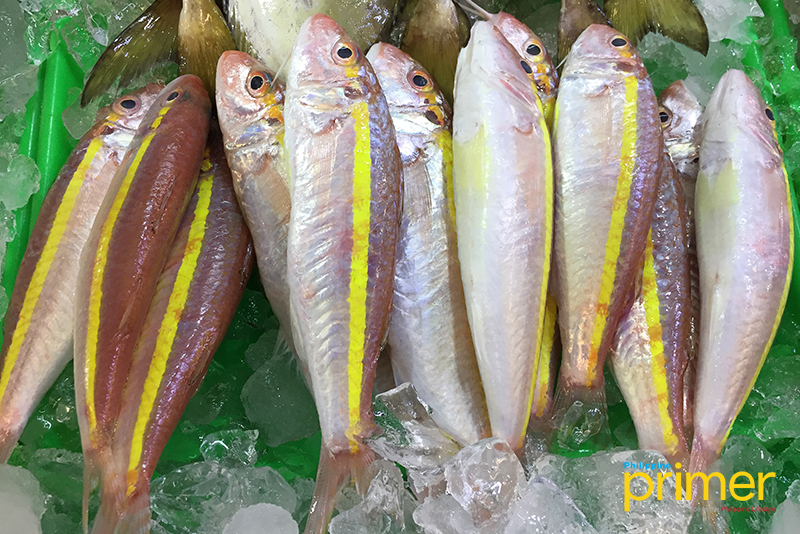
This type of fish has distinct bright red colored scales and yellow stripe on its body usually caught near the shore. Their white meat is delicate to cook and is often prepared in a paksiw dish.
The salmonete fish is available in public markets usually priced at Php 380 per kilo.
Tilapia (Mayan Cichlids)

Covering the 4.30% of the inland contribution of fisheries last 2016, this fish is obviously one of the most abundant fish that can be found in the Philippine archipelago. The term “tilapia” however, covers nearly hundreds of different species in general.
The tilapia fish is available in public markets usually priced at Php 60 per 1/2 kilo for the regular size; Php 135 per kilo for the large size.
Endangered: Tawilis (Sardinella tawilis)
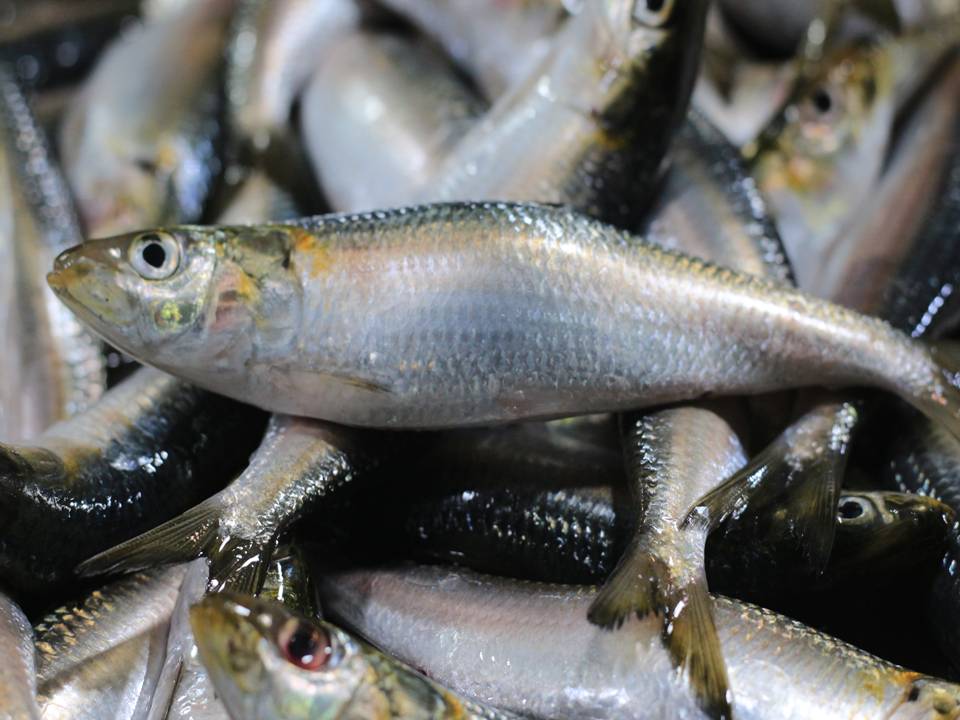
This type of fish is migratory that can only be found in the Philippines, in Lake Taal, which is the 3rd largest lake in the country. The fish was announced endangered on January 2019 and is now illegal to be bought and sold in markets.
What do you think of these common fishes found in the Philippine archipelago? Share your thoughts with us below!
]]>
What is your favorite golf course in the Philippines?
It is the question that I’m asked the most. There is no cut and dry answer to the question. Not to evade the question; but it speaks to the quality and the diversity of the golf courses in the country. There are reasons beyond what satisfies the intellect and stimulates the senses. The intangibles, if you will.
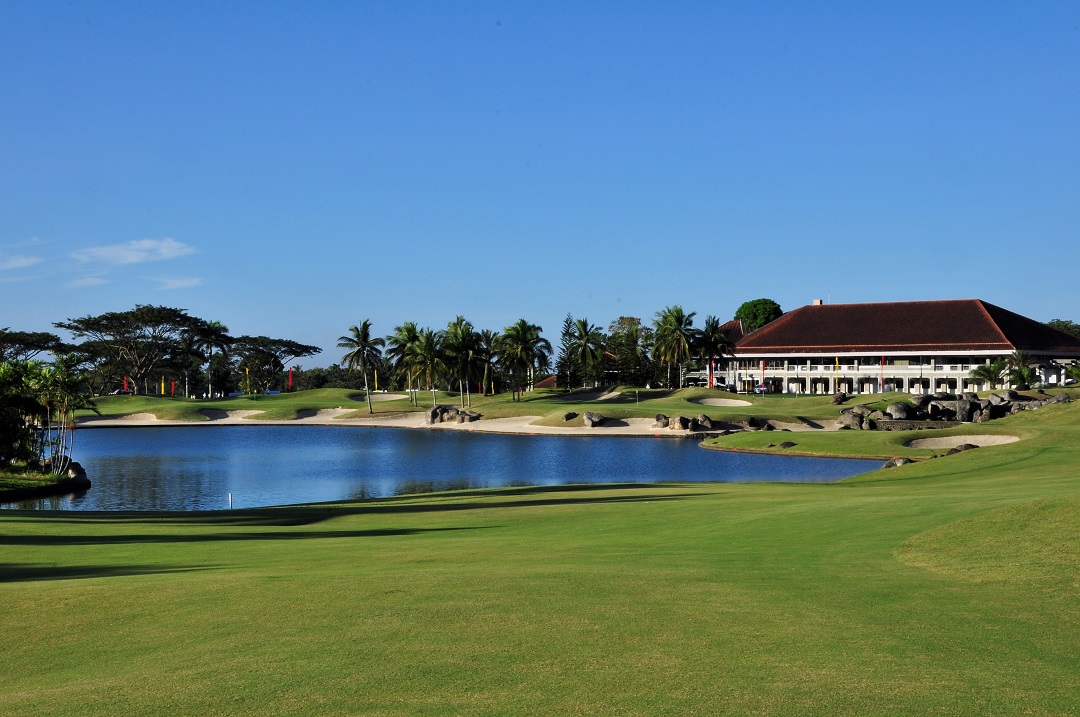
Mount Malarayat Golf and Country Club is the crown jewel of golf in Batangas today. The club is nestled at the feet of the mountain range for which it is named. At 1,025-feet above sea level the weather is appreciably cooler than lower locales and provides the ideal climate for golf.

The course was laid out by Bob Moore of the JMP Design Group who designed an almost surreal 27-hole layout. The golf course is home to three distinct nines; the Lobo, Malipunyo and Makulot courses, named after peaks of the Malarayat range. In a bit of serendipity, the opening hole on each course faces the peak after which it is named.
It is beautiful here. Flat out gorgeous. Of the country’s inland golf courses, there are few that match the manicured glory of Malarayat. Everything is perfect, just as it should be. The mountains provide a serene backdrop to the magnificent property.
The golf is as good as the golf course is beautiful.
The course is not overly long; a hair over 7,000-yards from the tips, regardless of which combination you play. Each of the 27-holes is unlike any of the others. All are beautiful, but some transcend the others and are some of the most beautiful holes of golf anywhere in the country.
The finishing holes on each nine are standouts, but if I had to choose a favorite, it would be the seventh hole on the Makulot Course. It was once named one of the 100 Most Beautiful Golf Holes outside of the United States by Golf Magazine. It’s a reachable par five, if you have the game for it and the shot into the green is magnificent; the green is nestled beside a lake, framed by acacia trees. It is one of the most beautiful shots you’ll face anywhere in the country.
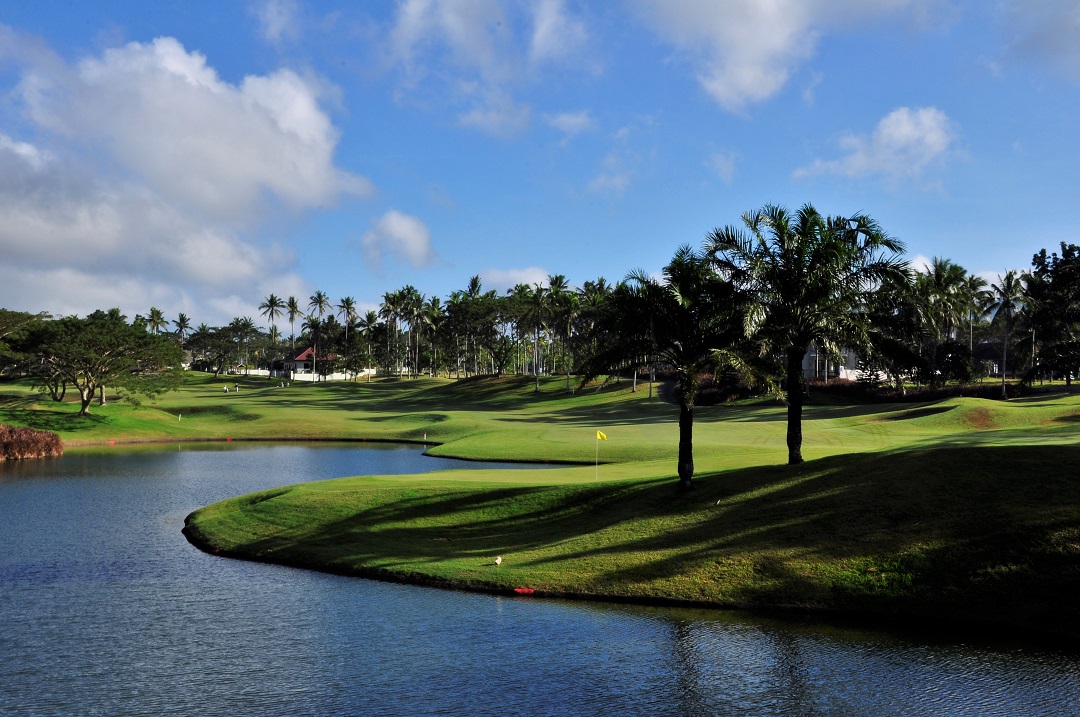
If you don’t have the long game to drive the shorter par fours and reach the fives in two, you need not despair. Malarayat rewards a tactical mind with decent control of the golf ball. There are generous areas from which you can approach the green from a reasonable distance.
The greens set Malarayat apart. The undulations on them need to be seen. Finding the correct quadrant of each green is of the utmost importance. The greens are always in amazing condition, which is a good thing given how difficult they are to putt.
That could be said about the golf course as a whole; the thing is in fabulous condition. I’ve been playing Malarayat for the better part of fifteen years now, and it is always in condition that would make most other golf clubs green with envy.
Beyond the golf and the abject beauty of the property, it’s the way everything comes together to make you feel, that I treasure the most here. The ultimate is to book a couple of nights in the hotel so you can savor each of the nines.
Malarayat transports you to a milieu of its own; one of beauty, grace and serenity with some pretty good golf in the bargain. That’s why it ranks high on my list of favorite golf courses.
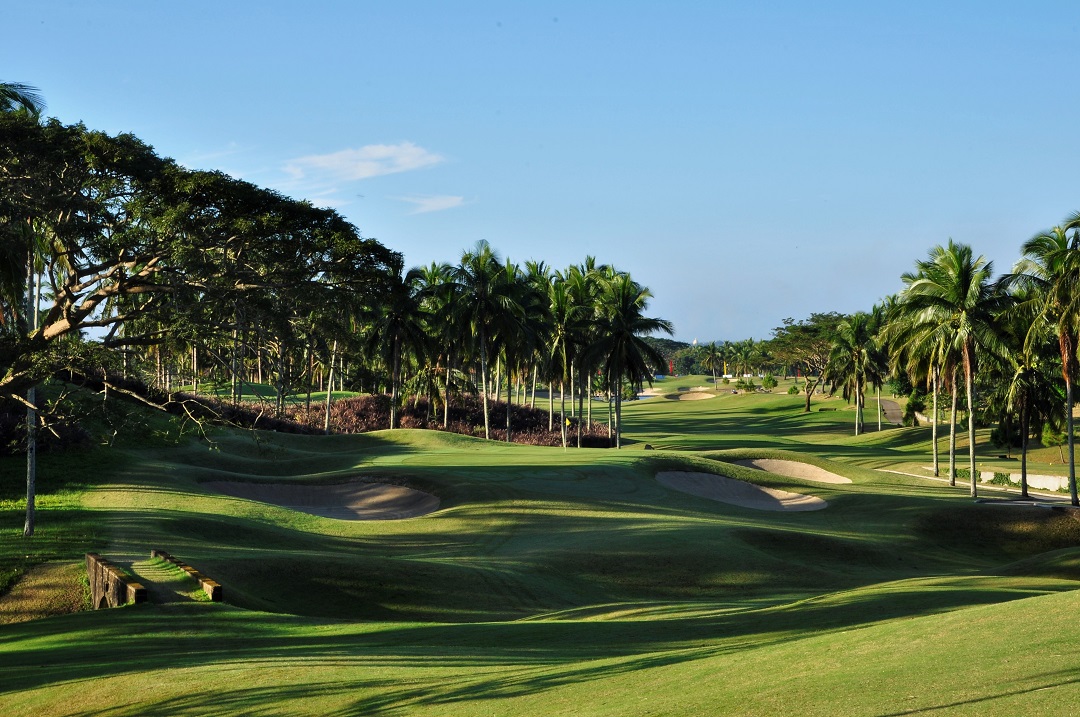

One of three signature courses of the Golden Bear, Jack Nicklaus, in the country, Manila Southwoods’ Masters Course has proven its worth against the best golfers in the country and the world. It has hosted the Eisenhower Cup (the world amateur golf championship), the Philippine Open on a number of occasions and was the home of the Resorts World Manila Masters, a leg of the Asian Tour and the richest professional tournament in Philippine golf.
It is over 7400-yards from the tips and has the variety and length to challenge the very best the game has to offer. It is a true championship test and deserves its place as one of the best golf courses in the country. Every club in your bag will be needed on the links of the Masters Course. The par fives present good scoring opportunities when played well. Your long irons will be tested on the longer par fours and long par threes. Guile and precision off the tee trumps length. Your ball striking will be tested coming into the greens, which sit at angles to the fairway. A precise strike to the correct quadrant of the green is needed to just keep your golf ball on the green.
The golf course is beautiful. A former sugar cane field, Nicklaus took advantage of the creeks and streams that crisscrossed the property and built on them, creating lakes and marshland habitat for the endemic and migratory birds that call Southwoods their home.
The results are impressive. Manila Southwoods Golf and Country Club is an Audobon avian sanctuary; the 175th golf course in the world to receive this distinction. Its most visible residents are the hundreds of egrets that make the trees on the right side of the sixteenth fairway their home. Happy hour here is quite a sight. Imaging sipping your favorite libation to the sight of hundreds of egrets flying it to roost for the night.
There are 52 other avian species that call the Carmona golf property their home. Southwoods’ protected habitat assures its feathered residents that they will always have a home in and on the fairways of the club.
There are so many memorable holes on the Masters Course. Each is unique and offers its own set of challenges. There are some brutally tough holes. Two has blossomed into the toughest hole on the golf course. At 438-yards from the gold tees, it isn’t overly long. The bunker on the right guards the ideal landing area off the tee. Hit it and you’ll have a short iron to the green. Tee shots further to the left will leave you a long iron or hybrid into the green. Clubbing for the approach shot is a challenge as the hole plays into the prevailing wind. This is a classic golf hole.
Six used to be the handicap one but has now been demoted to the second most difficult hole on the front side. Like two, it isn’t particularly long at 419-yards from the tips. It is the precision that is asked from you off the tee that makes it so difficult. The ideal line is over the bunkers on the right, challenging the wind, the water hazard and the bunkers just beyond it. Tee shots to the left side of the fairway mean challenging the deep greenside bunkers to the left of the green. The green is deep and relatively flat. The green has a bit of break in it but it’s so subtle that it’s difficult to divine. A great par four.
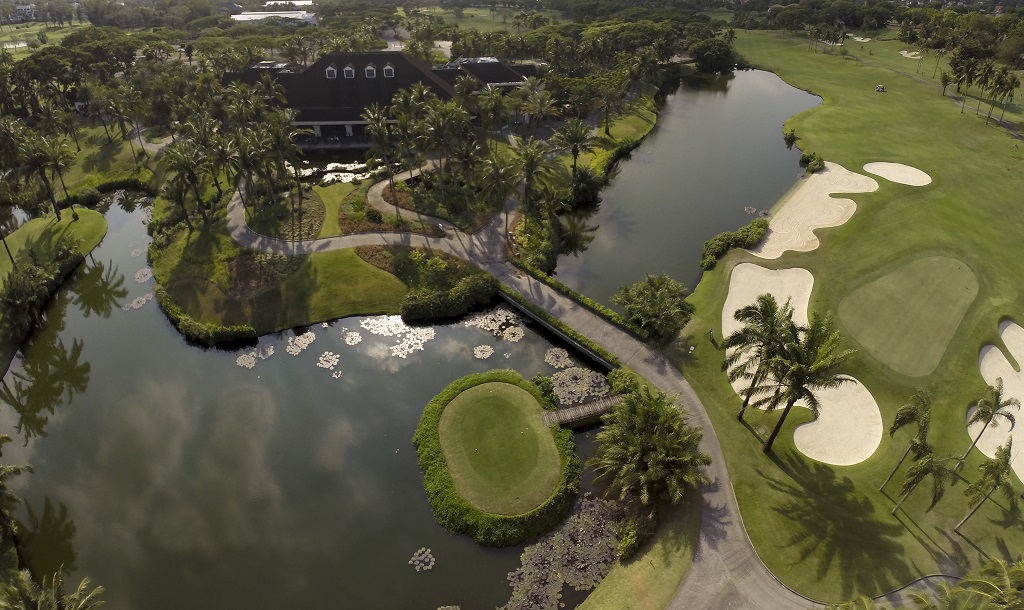
Nine is the hole that most amateurs dread. Everything is laid out in front of you; avoid the bunkers on the left and out-of-bounds on the right. The green is shallow on the right and deeper on the left. A good drive will leave you a mid to short iron into the green.
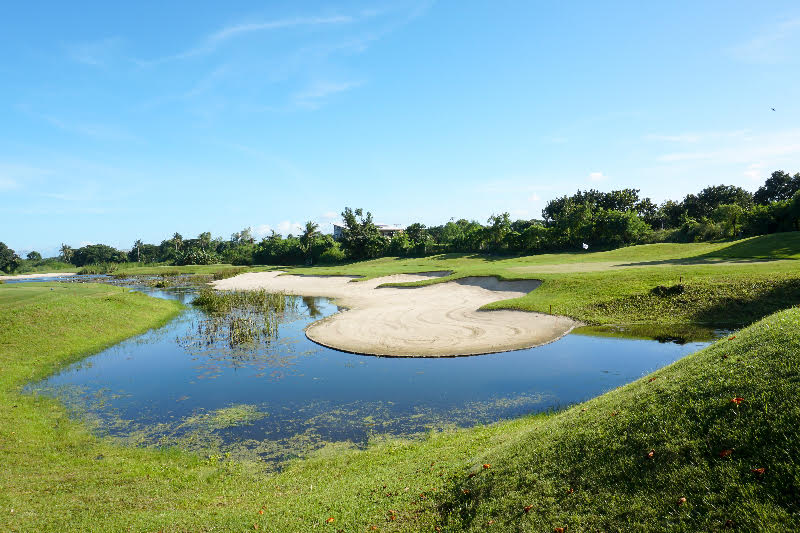
Ten is one of our favorites; a massive 446-yard par four that plays dead into the prevailing wind. Interestingly, there isn’t a single bunker on this hole. Not that it needs it. A stream bisects the fairway and guards the ideal line into the green – the closer you are to it, the better your angle into the green. Most will play to miss the green on the left as an errant shot to the right means a watery grave for your golf ball. Ten is one of the strongest holes on the golf course.
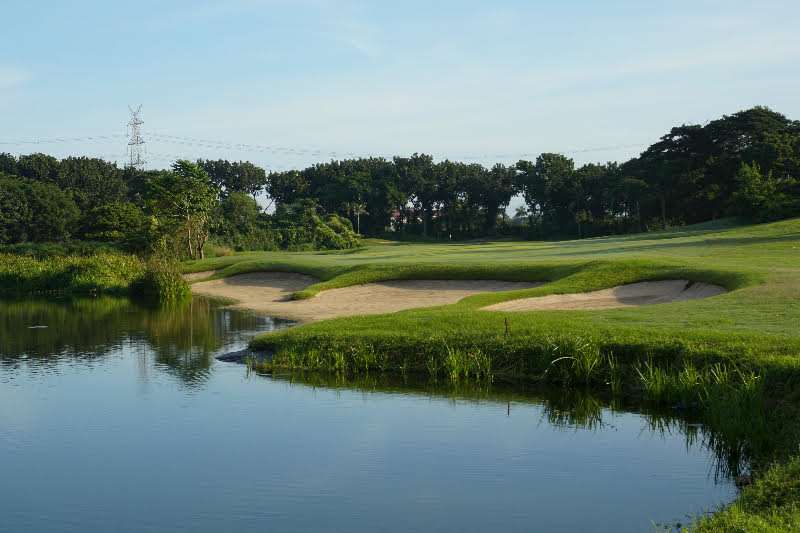
Fifteen is a gorgeous par five. At 545-yards from the back tees, it is reachable in two by longer hitters. The only issue is over two hundred yards of water to avoid on the left side. The three-tiered green offers a generous target but misses to the right will be penalized by bunkers and deep rough.
Eighteen is a tremendous finishing hole. It has provided its share of drama over the years with dozens of fantastic finished to its credit. It’s a hole that can make or break one’s tournament; eagles and doubles are possible here. Shorter hitters are best advised to play up the left side of the fairway. This avoids the water hazard on the right and gives you the ideal line into the green. In true Nicklaus tradition, the green is set up to receive a fade. Having one in your arsenal gives you a distinct advantage.
What puts Southwoods Golf and Country Club’s Masters Course over the top is the condition of the golf course. It is one of the best conditioned golf courses in the country. The greens are superb. The golf course has been at or near the top of the country’s golf course rankings for the last 25-years and it should remain there for the next twenty-five.
]]>Do exercise dumb bell whole day for your shoulder muscle among the three days fitness series. Introduce four step dumb bell exercise.

Dumb bell shoulder press 1. Sit at the bench while straight your back. 2. Hold dumb bell 90 degree from your arms while open arms butterfly position. 3. Lift up your arms straight on your center head 4. Return slowly next position. EXERCISE. whole shoulder.
Click the picture you could see the movement.

Dumb bell front raise 1.Stance your foot your shoulder distance & hold dumb bell while facing your back hand forwarding front. 2. Set position your hand over your front thigh 3. lift dumb bell to front side until your shoulder height while straight your arms 4. Return slowly next position. EXERCISE. Front triangle muscle.
Click the picture you could see the movement.

Dumb bell side lateral raise 1. Stance your foot your shoulder distance & hold dumb bell while facing your back hand forwarding both side. 2. Set position your hand over your both side of thigh 3. lift dumb bell to both side until your shoulder height while slight vent your arms. 4. Return slowly next position. EXERCISE. Side triangle muscle.
Click the picture you could see the movement.

Dumb bell vent over raise 1. Stance your foot your shoulder distance & hold dumb bell while vent your back 90 degree. 2. Set position your hand under your knee. 3. lift dumb bell to both side until your shoulder height while slight vent your arms. 4. Return slowly next position. EXERCISE. Back triangle muscle.
Click the picture you could see the movement.
+ All step do 5 set 15 times. choose dumb bell weight can reach 15 times raise one time. while you want exercise at home without dumb bell you may use bottled water.
]]>